We are happy to announce the winner of our nineth Partnership with Schools essay competition.
Designed to encourage young people with an interest in law, the annual essay competition is open to all sixth form students on the Island. A level or Baccalaureate students were invited to write a 1,000 word essay in response to one of these two questions:
- In the age of the internet, consider protection of and restrictions on freedom of speech. How can and should the law deal with this?
- Is the Manx legal system doing enough to protect victims of domestic abuse?
Simcocks Advocates and our Trainee Advocate held seminars at Ballakermeen High School and at King William’s College, and presented to students at Ramsey Grammar School, St Ninian’s and Castle Rushen High Schools. The essays we received in response were interesting, thought-provoking and impressively mature.
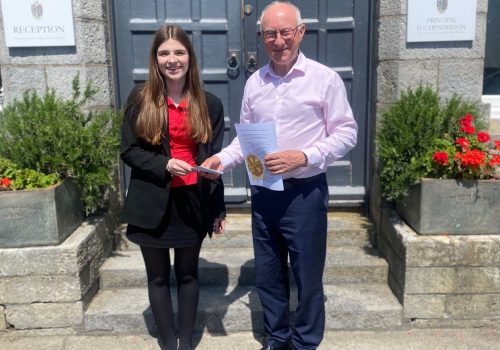
The winning essay came from King William’s College student, Daisy Maddocks, who wrote a sophisticated essay on the laws surrounding domestic violence. CEO Phil Games visited Daisy at the College and presented her with the £500 prize, hearing about her plans to study law at university next year.
Phil commented: “It’s always so heartening to meet these young people interested in a career in law; to hear their ideas and opinions. I’ve always found the field of law to be endlessly interesting, challenging and engaging, so it’s great to meet the lawyers of the future, who will no doubt be the thought leaders in the coming decades.”
You can read Daisy’s excellent essay here.

Simcocks Advocates recently hosted a wine and cheese tasting night at the Food Cellar in Douglas, in aid of Forget Me Not, the local dementia charity.
The ticketed event saw more than 70 people gather to enjoy a range of wines and cheeses on a beautiful May evening, whilst raising more than £3,000 to help provide dementia specialist nurses for Isle of Man patients.
Forget Me Not is an Isle of Man registered charity formed in August 2018, with a mission to improve the support available for people living with dementia and their families in the Isle of Man.
Gemma Wild, Fiona Kirkham and Natalie Radford represented the charity on the night, with Gemma saying a few words to the crowd about the charity. There was a feeling at the event that this is a cause close to many people’s hearts, and with 1 in 14 over 65s suffering with the disease, it’s not hard to see why. Forget Me Not estimates that there are around 1600 people on the Island living with dementia, but that figure could be as high as 1800, taking into consideration those with suspected dementia.
CEO of Simcocks, Phil Games commented:
“I’m so pleased we have been able to do something to assist this fantastic charity help local people in need of this specialist support. It was a really enjoyable evening – the Food Cellar was a wonderful venue and the team did an amazing job looking after us.”
Simcocks Advocates is delighted to announce that during 2026 its staff will celebrate several long service milestones: 40 years for CEO Phil Games, 35 years for Director David Spencer, 30 years for Search Clerk Julie Moore, 25 years for Director Irini Newby, and 20 years for Advocates Winston Taylor and Kevin O’Loughlin.
In fact, retention of staff at the law practice is unusually high for the market. Simcocks has five team members who have been with the company more than ten years, six who have clocked more than twenty years, three who have done more than thirty years and one who has been with Simcocks forty years. This totals 350 years between the 15 longest serving people, or an average of 23 years’ service each.
The company recently had a night out to celebrate these amazing milestones with the staff.
Phil Games commented:
“I can hardly believe it’s been 40 years since I made the move to Howard Simcocks’ company to finish my articles, where I have learnt so much and built a career firmly rooted in people, and in providing a reliable service for our clients. That’s the key to any successful, fulfilling career: making meaningful connections. The best thing about Simcocks, and my four decades here, is the focus on people.”
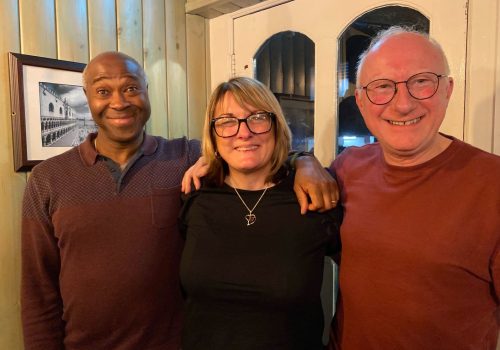
Photo (left to right): Winston Taylor, Julie Moore, Phil Games

Companies, as creatures of statute, owe their existence to the laws of the jurisdiction in which they are incorporated. Many modern jurisdictions allow companies to enter and leave their jurisdiction from and to jurisdictions with equivalent laws on continuation of legal existence and of obligations.
The Isle of Man has two separate regimes under which companies can move to or from the Isle of Man.
Coming to the Isle of Man
Companies in the Isle of Man are usually incorporated either under the Companies Acts 1931-2004 or the Companies Act 2006, and similarly a company coming to the Isle of Man can register under either regime.
The Companies (Transfer of Domicile) Act 1998 provides a procedure for companies incorporated outside of the Isle of Man to re-register and continue under the Companies Acts 1931-2004. The Companies Act 2006 provides for a more streamlined process for companies to re-register under that Act, which reflects its slightly less onerous administrative regime and more relaxed approach to capital maintenance. In either case, the company ceases to be established in the foreign jurisdiction and continues in the Isle of Man as the same legal entity, so that it retains its property, liability for its obligations and any existing civil or criminal proceedings, rulings or convictions are unaffected.
Which companies can apply?
A solvent company incorporated in a jurisdiction which permits the company to be continued in the Isle of Man can usually apply. There are however some restrictions including where the laws of the company’s country of incorporation for the time being do not permit it; the company is insolvent or in liquidation or subject to insolvency proceedings; a receiver/manager has been appointed in relation to any of its assets; or it has entered into an arrangement with creditors which has not been concluded.
Consequences of continuing in the Isle of Man
When a foreign company continues in the Isle of Man it is not deemed to create a new legal entity and it does not prejudice or affect the continuity of the company which was formerly a foreign company and becomes a continued company.
On the date of continuance the foreign company becomes a company to which the relevant Isle of Man Companies Act(s) apply as if it was incorporated under that Act and a certificate of continuance is issued. The company’s annual return date will be the anniversary of its date of incorporation in its former country of incorporation.
On continuing:
- the property of the foreign company continues to be the property of the continued company;
- the continued company continues to be liable for the obligations of the foreign company;
- any existing cause of action, claim or liability to prosecution in respect of the foreign company is unaffected;
- any civil, criminal or administrative action or proceeding pending by or against the foreign company is unaffected; and
- any conviction against, or any ruling, order or judgment in favour of or against the foreign company may be enforced by or against the continued company.
Before applying
If the company undertakes an activity which is regulated in the Isle of Man it will have to ensure that it has all necessary licences or registrations from the Isle of Man authorities before continuing as an Isle of Man company.
Where the company has created certain security interests which remain outstanding it is necessary to obtain the prior written consent of the chargeholders to the application (and consent to the order of registration), and particulars of any charges created by the company which are registerable in the Isle of Man must be submitted as part of the application process.
Name approval may be sought from the Isle of Man Companies Registry prior to making application for continuation. Names can be reserved for a period of up to 12 weeks.
The company will be required to have a registered office address in the Isle of Man, this may be an address maintained by the company or may be provided by a licensed corporate service provider (CSP). A company incorporated under the Companies Act 2006 is required to have a registered agent, who must be a CSP. All companies are required under the Beneficial Ownership Act 2017 to have a nominated officer unless exempt. The nominated officer must be a natural person or a CSP.
Proof from the appropriate authorities of compliance with all provisions relating to the company leaving its jurisdiction of incorporation will need to be provided prior to the company being continued in the Isle of Man. It is important to liaise with the appropriate authorities at an early stage to ensure that this will be available, whilst maintaining careful control over timing to ensure that the company is not discontinued before being continued in the Isle of Man.
A memorandum and articles of association which comply with the relevant statute must be prepared unless, in the case of the articles, the unmodified statutory format is to be used.
When the completed application is made to the Isle of Man Companies Registry a New Entity Declaration form must be submitted in the appropriate form. Submitting all application compiled in the correct format to comply with the legislation will hasten the process of the Registry reviewing it.
Companies leaving the Isle of Man
When companies leave the Isle of Man, a different regime applies depending on whether they are incorporated under the Companies Acts 1931-2004 or the Companies Act 2006.
Which companies can apply?
A solvent company incorporated in the Isle of Man can usually apply. A company may not apply if it is in liquidation or subject to insolvency proceedings; a receiver/manager has been appointed in relation to any of its assets; or it has entered into an arrangement with creditors which has not been concluded.
Where can an Isle of Man company redomicile to?
An Isle of Man company can only transfer domicile to a country or territory whose laws allow for the following:
- The property of the company continues to be the property of the continued company;
- The continued company continues to be liable for the obligations of the company;
- Any existing cause of action, claim or liability to prosecution in respect of the company is unaffected;
- Any conviction against, or any ruling, order or judgment in favour of or against the company may be enforced by or against the continued company.
As a matter of Isle of Man law, transfer of domicile of an Isle of Man company is not deemed to create a new legal entity or prejudice or affect the continuity of the body corporate that was formerly an Isle of Man company.
Consideration should be given to whether the company would breach any restrictive covenant or warranty in any agreement by making an application, and where necessary consent should be sought.
Charges created by the Company
The written consent by the holders of all charges is required to be provided as part of the application process.
A Note of Caution
Whether the company is arriving on the Isle of Man register or departing from it, it is worth noting that the consent of the Isle of Man registrar to continue, either in the Isle of Man or abroad, expires after the statutory time period which is applied as a strict time limit over which the Department has no discretion once the certificate has been issued. Failure to meet the prescribed time limits will result in the need to reapply (and pay another application fee).
There is a possibility of legal uncertainty if the company is received in the new jurisdiction without discontinuing in the old one within the statutory period, so it is important to ensure that adequate preparations are in place to ensure that the process is completed on time.
Understanding the process and streamlining to ensure compliance with statute and applicable time limits is essential and we are happy to advise.

Author: Janice Turnbull
The above material is of a general nature only. It does not constitute legal advice nor does the distribution or receipt of this material create a client-advocate relationship. Readers should seek specific advice in relation to any decision or course of action.

Now in its ninth year, we are pleased to once again launch our Partnership with Schools initiative. Simcocks advocates have presented to and talked with students at Ramsey Grammar School and King William’s College recently, with a seminar and a presentation at Douglas high schools coming up.
This annual essay competition is designed to encourage young people with an interest in law, and is open to all sixth form students on the Island. Advocates will present this year’s competition to local high schools over the next few weeks and invite A level or Baccalaureate students to write a 1,000 word essay on one of these two topics:
- In the age of the internet, consider protection of and restrictions on freedom of speech. How can and should the law deal with this?
- Is the Manx legal system doing enough to protect victims of domestic abuse?
The essays are marked by a former English teacher as well as by an advocate, and feedback is given to all essays submitted. The winning entry receives a £500 voucher, and an opportunity to do a work experience placement at the firm.
The deadline for entries is Thursday 30 April 2026. Contact Lisa Smith for more information.

Simcocks Advocates has successfully secured the return of 10 Bitcoin, valued between £600,000 and £1mn, seized by law enforcement during an investigation into suspected money laundering by unrelated third parties.
Chris Brooks, Head of Litigation and Dispute Resolution at Simcocks Advocates, acted for the client with Ian Whitehurst of Exchange Chambers providing advice as counsel.
The work focused on the legal basis for continued detention of cryptocurrency where the asset holder is not suspected of criminal conduct and the ability to make application to seek their return.
Particular emphasis was placed on statutory and legal compliance by the relevant law enforcement agency and the evidential sufficiency to support their actions.
Following an application for the return of the Bitcoin being filed, the law enforcement agency returned the Bitcoin to the client in full prior to any hearing.
This matter illustrates the increasing tension between existing and very complex statutory frameworks and the practical realities of digital asset enforcement.
Chris Brooks commented on the success:
“The mechanisms for challenging search and seizure in the context of a money laundering investigation, are complex and opaque, and it is vital that there is a clear path to do so in a free society. I am pleased to have been able to assist someone innocently caught up in a money laundering investigation and facilitate a return of their digital assets”.

This article traces the evolution of the legal meaning of “children” and considers how it has transformed to reflect the reality of society and family dynamics.
Historic development
Before the Legitimacy Act 1985, illegitimate children, that is children born out of ‘wedlock’, were not treated in the same way as their legitimate counterparts in respect of legal interests.
This now anachronistic approach has been changed through legislation. The notion of ‘illegitimacy’ is now an irrelevant concept for today’s generation, and rightly so. Society is always changing, and Manx law – through the Reproductive Rights Act 2025 – is too.
The evolving meaning of “children” in the law, in particular in private documents such as wills and trust instruments, is directed at including those intended to benefit from the trust or estate. Nowadays, the statutory default position is that “children” includes legitimate, legitimated, illegitimate and adopted children. The Reproductive Rights Act 2025 has further affected the position.
At common law, the default meaning of “children” was exclusionary – in private documents the starting point was that “child” did not include an illegitimate child. There was no concept of legal adoption in the common law, and the common law did not reflect the reality of modern reproduction techniques in that, for example, a male donor would be regarded as the father even if that was not the intention of those concerned.
Intervention by statute
The legislature intervened with a more inclusive approach. The Legitimacy Act 1985 provides that reference to children includes any illegitimate child unless the contrary intention appears. The Adoption Act 2021 later provided that an adopted person is to be treated in law as if born the child of the adopters or adopter. Part 9 of the Children and Young Persons Act 2001 (CYPA 2001) further advanced the law in determining the legal parenthood of children born through assisted reproduction methods.
This inclusive approach was recently demonstrated in the UK case Marcus v Marcus (2024) EWHC 2086 (Ch) where a stepchild was found, for the purposes of a trust deed made in 2003, to be included within the definition of “children”.
Jonathan (born 1981) was a biological child of the settlor. Edward was born in 1978 and although his birth certificate recorded the settlor as his father, a paternity test after the settlor died proved the settlor was not Edward’s father. The settlor died in 2020, still believing Edward to be his biological child.
Jonathan argued that as the “natural meaning” of the word “child” does not include stepchildren, and as the settlor had not known that Edward was not his child so could not have intended a different meaning, the word “child” should exclude Edward. The court decided however that the settlor when using the word “children” in 2003, had meant to include Edward.
This case marked a further development in an inclusive interpretation of the “children” that can encompass all family structures. The Manx courts have recognised that ‘while biological ties give rise to a strong presumption of family life, it is not conclusive’ (Re Child 1 and 2 2012 MLR 581). This is judicial recognition that the meaning of “children” cannot rely on biological factors alone, and in wills/trust deeds the important factor is the testator/settlor’s intention.
Trust deeds and wills
Given this, it is important for professional trustees who administer trusts to ensure that the testator/settlor’s intentions are clearly known, by drafting and interpreting a clause including “children” so that the appropriate persons are included within the class.
Ascertaining the class of beneficiaries of a trust or will is ever more pressing today, as more children are being born through in-vitro fertilisation (IVF) methods and surrogacy arrangements.
The case of Re AB (A Child) (2024) EWHC 586 highlighted the complexities that can arise in this area. In Re AB, the child was conceived and born under a surrogacy arrangement in California, whereby an embryo was created using the commissioning mother’s egg and donor sperm and carried to term by the surrogate mother.
The child was legally adopted by the commissioning parents in the US, before they moved to the UK. The US adoption was automatically recognised in England and Wales due to the Adoption (Recognition of Overseas Adoption) Order 2013. However, that was not enough for the child to be a beneficiary under a family trust which predated the reform of English adoption law in 1976 as, at common law and under the UK Human Fertilisation and Embryology Act 2008, the surrogate mother would be regarded as the parent of the child.
The commissioning parents therefore applied for a parental order under the HFEA 2008. One of the conditions for a parental order is that “the child has been carried by a woman who is not one of the applicants”. The issue was whether the Adoption and Children Act 2002, in providing that the child was to be treated in law as if born as the child of the commissioning parents, deemed the commissioning mother to have carried the child. The court decided that who had carried the child was a question of fact, not law, and since – factually – the commissioning mother had not carried the child, a parental order could be made. Presumably (the judgment does not say) the trustees of the family trust then recognised the child as a beneficiary.
Reproductive Rights Act 2025
The recent Reproductive Rights Act 2025 (“RRA”) received royal assent on 21 October 2025. The Act will (when brought into operation) make several important changes that aim to bring Manx law largely in line with the UK HFEA 2008.
The RRA provides, for example:
- That the woman who carries a child conceived by artificial means is the mother (subject to an adoption order).
- That the father of a child conceived by artificial means is the husband of the mother, where the husband consented to the treatment.
- Where the mother was party to a marriage or civil partnership with another woman, then the latter is to be treated as a parent of the child unless she did not consent to the treatment.
- That one person or two people can apply to the High Court for a parental order, that is an order providing for a child to be treated in law as the child of the applicant(s), where the child has been carried by another woman. This would enable commissioning parents in a surrogacy arrangement to apply for a parental order.
- That no surrogacy arrangement is enforceable by or against any of the persons making it. The RRA will also make it an offence to do certain acts in relation to promoting or negotiating a surrogacy arrangement.
The RRA therefore marks an important development of the meaning of “parent” and consequently of “children”- a welcome step towards more legal inclusivity as the status of more Manx couples is accommodated within statute.
International instruments
The recognition of legal parentage varies across international borders. The Hague Convention on Protection of Children and Co-operation in Respect of Intercountry Adoption does enable automatic recognition of adoption overseas, whilst the Working Group on Parentage Surrogacy established by the Hague Conference on Private International Law was set to meet in November 2025 to finalise its last report. The group is seeking to create a new instrument providing greater certainty of legal parentage across international borders, particularly for surrogacy arrangements.
Older trusts may not have factored in these developments and may include references to children that may be open to argument. Although the Variation of Trusts Act 1961 allows the court to assist in varying a trust, this can be a costly solution.
Conclusion
The RRA signals that Manx law is continuing to successfully adapt to reflect the reality of Manx families in contemporary society. The Act also serves as a reminder to those creating and administering a trust or estate to think carefully about the evolving meaning of “child” to include the correct intended beneficiaries.
Authors: Kevin O’Loughlin and Eleanor Robb

Simcocks is pleased to announce that Director Alex Spencer, Head of Litigation and Dispute Resolution Chris Brooks and Consultant Advocate Elizabeth Simpson have been ranked by the Chambers & Partners UK Guide 2026. Moreover, our teams have been ranked Band 2 in Corporate & Finance and in Dispute Resolution.
Feedback to the independent directory included:
“Simcocks has a high standard of service offered by an excellent cross-section of lawyers.”
“Simcocks has a high standard of service offered by an excellent cross-section of lawyers.”
Chambers & Partners sources said this of Alex:
“Alex is highly personable, knowledgeable and succinct.”
Another source said of Chris:
“Christopher is brilliant. He listens and provides supports throughout and gives very clear advice.”
And of Elizabeth, sources said:
“Elizabeth is an extremely capable litigator. She has deep technical knowledge and provides well-reasoned, concise and highly commercial advice.”
Law firms and individual lawyers are ranked following independent research. The qualities on which rankings are assessed include technical legal ability, professional conduct, client service, commercial astuteness, diligence, commitment, and other qualities most valued by the client.

We’re giving away four tickets (worth £65 each) to the wonderful Age Concern Isle of Man charity ball on 15 November. Take your friends for an amazing night out at the Empress. Welcome drink, 3 course dinner, casino tables, disco. Dress code: Las Vegas Glamour!
COMPETITION TERMS & CONDITIONS
Comment on our competition post on Facebook to enter the prize draw.
Competition is open to Isle of Man residents over the age of 18.
One winner will be chosen at random.
No cash alternative is offered.
The winner will be chosen at 10am on 31 October 2025.
The name of the winner will be announced in a Facebook post on 31 October 2025 with instructions for getting in touch to redeem the prize.
Simcocks takes no responsibility if the event is cancelled or postponed, but may provide tickets for a similar charity event on another date.
This giveaway is not sponsored, endorsed or administered by Facebook.
No purchase necessary.
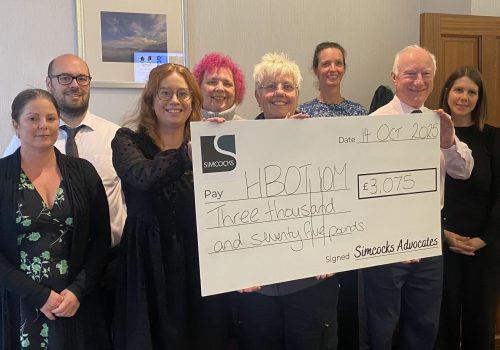
Simcocks has raised £5,470 for the Isle of Man Hyperbaric Chamber Charity over the last few months.
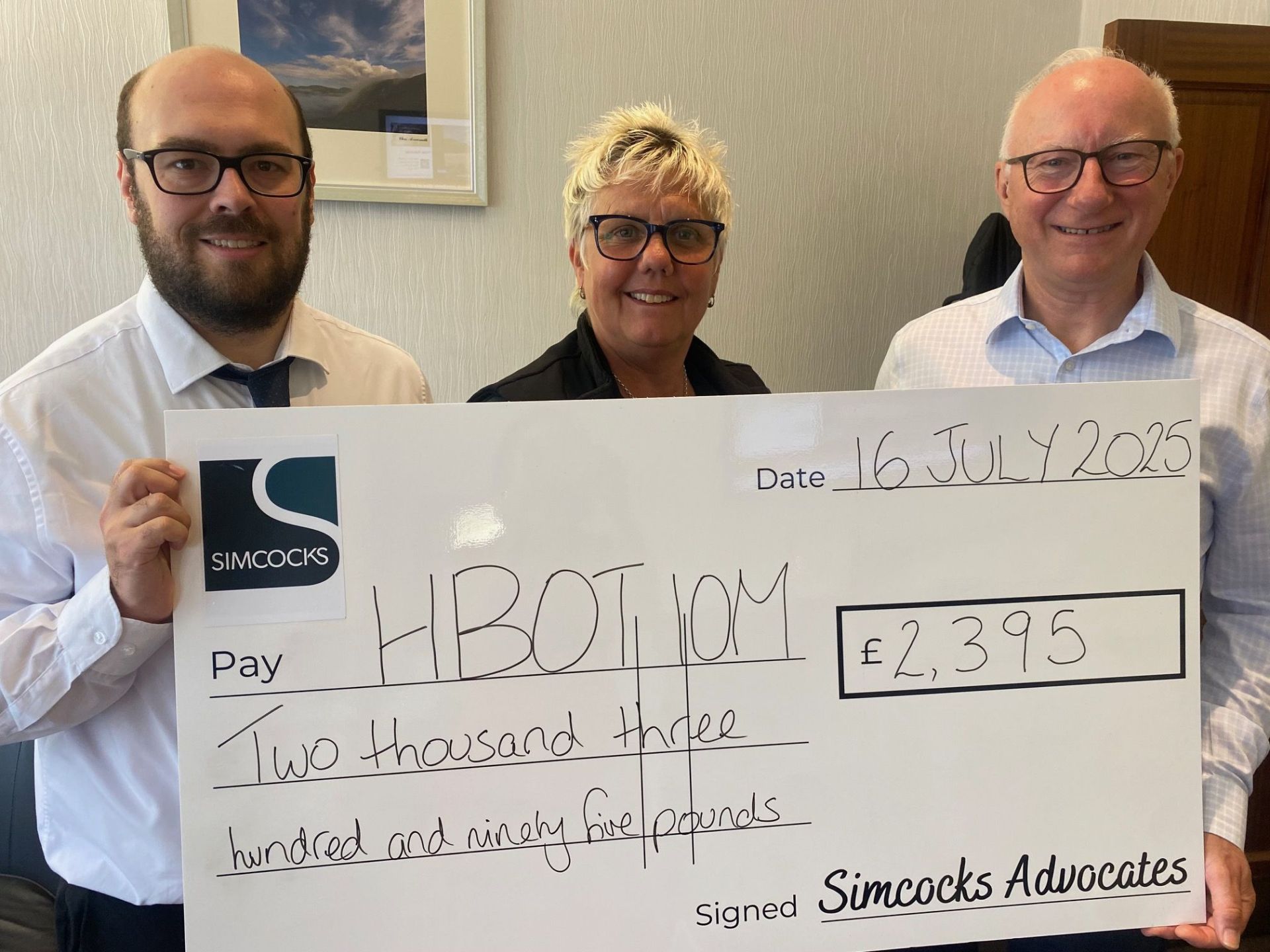
The Charity Committee held a tombola in summer in aid of the local charity, which raised £2,395. Then in September a team did a sponsored hike along Hadrian’s Wall, which raised £3,075.
Debbie Barron, a Trustee of the charity and tireless champion of the Hyperbaric Chamber, thanked the company for its support and all the work it’s has undertaken to raise money. She added that HBOT has new volunteers who will be trained up to work in the chamber, thanks to funds raised.